
Congratulations, you’ve been promoted or newly hired as a manager. Now what?
You’ve never been there.
The job is real. The expectations are imaginary.
Overnight, people start projecting: be “more strategic”, “have the answers”, “unblock everything”, “protect the team”, “move faster”, “be calm”, “be inspiring”, “be decisive”. Usually all at once.
And the quiet part: you’re not earning that much more. But your responsibilities just exploded.
Worse: the work that made you good, the work that gave you flow, is no longer your job.
Being a first-time manager is hard for one reason: you’re now responsible for outcomes through other people. And your old strengths can quietly become your biggest bottleneck.
That’s the game switch. Accept it.
Rules of thumb sound good here. They fail under pressure.
Principles help. Because principles let you reason when the situation is new, messy, and political.
So here are mine. Not as theory. As an operating system.
1) Accept the physics you’re entering
Leadership is not a badge. It’s a different game with different physics.
Before you say yes to the promotion or posiiton, internalize the incentives:
Your time becomes a shared resource.
Your work becomes a coordination system.
Your output becomes other people’s output.
The cost of mistakes scales faster than you think.
Most first-time managers don’t fail because they’re “bad leaders”.
They fail because they keep playing the old game with a new title.
Here’s the price nobody markets:
Leadership costs:
identity (less dopamine from shipping)
emotional labor (conflict, ambiguity, disappointment)
discipline (coherence under stress)
accountability (your name on outcomes you didn’t personally execute)
If you’re not willing to pay that cost, don’t accept the role.
Not because you can’t. Because you shouldn’t.
The real danger is the middle ground: premature promotion + unclear goals.
You stop becoming a great technical contributor. You also don’t become a real leader.
You become a generalist without leverage. A manager who manages through meetings. A title without authority of character.
That’s the duck problem: can’t fly properly, can’t run, swims poorly.
2) Leverage through people is real leverage. It just has different physics.
Leverage is when output is not linear to effort.
Modern work rewards three kinds of leverage:
labor (people)
code
media
Code and media are “permissionless” leverage. You can deploy them without asking anyone.
People are not.
People leverage is powerful, but it’s not mechanical. It’s a natural system.
If you treat people like code, you’ll try to debug humans, rewrite them, force deterministic behavior.
You’ll get resistance, politics, disengagement.
If you treat people like media, you’ll try to message your way into alignment.
You’ll get performative leadership and shallow buy-in.
The right model is simpler:
Code leverages logic.
Media leverages attention.
People leverage leverages trust.
More precisely: people leverage is compounding trust inside clear standards and incentives.
That’s why management feels slower at first.
Your output isn’t shipping features anymore.
Your output is building a system that ships without you.
Trade-off: people leverage only scales if you pay coordination cost upfront.
Hiring. Onboarding. Alignment. Conflict. Culture. Incentives.
First-time managers feel robbed because “I work more and ship less.”
But you are shipping.
Just not code.
You’re shipping throughput.
3) Coherence is the real authority
Trust is not “soft”. Trust is a system property.
If your team can’t predict you, they can’t coordinate with you.
If they can’t coordinate, they slow down.
And when things slow down, you’ll compensate with control.
Control kills trust.
So your first job isn’t process.
It’s coherence.
I define coherence simply:
Believe. Say. Do. Same direction. Always.
Want punctuality? Don’t arrive late.
Want high standards? Don’t normalize sloppy delivery.
Want calm and sharp? Don’t panic in public.
Want accountability? Don’t blame in ambiguity.
This isn’t “being nice”. This is reducing variance in a human system.
Coherence has a cost: you lose the ability to be random.
The upside compounds: your presence becomes stabilizing. People stop guessing. Execution speeds up.
And here’s the part most new managers miss:
Power doesn’t come from the title.
Power is borrowed trust.
Spend it like cash and you’ll go broke.
The more you rely on visible coercive power (title, pressure, punishment), the more you get short-term compliance and long-term distrust.
You can force behavior for a while.
You can’t force long-term commitment.
The most durable power is reference power: people follow you because they respect you, not because they fear consequences.
Reference power isn’t charisma.
It’s moral authority.
And moral authority isn’t speeches.
It’s coherence.
One line I keep taped to my brain: Be a Doer not a Talker.
If you can’t hold a consistent standard yourself, you can’t truly lead.
4) Trust is a battery. Spend it deliberately. Recharge it daily.
Trust is not a vibe. It’s a balance.
Every interaction either charges it or drains it.
And when it hits zero, everything becomes expensive.
Low trust changes execution physics:
decisions slow down
people optimize for safety, not outcomes
bad news arrives late
alignment becomes meetings
accountability becomes policing
Here’s the trap: most managers drain trust without noticing.
Small withdrawals, repeated daily:
They interrupt.
They change priorities without context.
They ask for ownership, then override decisions.
They reward speed while preaching quality.
They disappear when things break and show up only to judge.
None of that looks dramatic.
But it compounds.
So manage trust like you’d manage production reliability: assume it decays unless you actively maintain it.
What charges the battery?
Clarity. Consistency. Follow-through. Fairness.
Owning mistakes quickly.
Sharing context early.
Protecting the team from chaos when you can, and naming constraints when you can’t.
And one rule that ties back to power:
Every time you use coercive power, you spend trust.
Sometimes you must. But don’t pretend it’s free.
You can’t charge trust past 100%.
And you can drain it to a point where it never holds the same capacity again.
That’s the real cost of sloppy leadership early: you damage the battery before you need heavy current.
5) The real hierarchy is trust and expectations
Most teams don’t run on formal roles.
They run on invisible agreements.
Psychological contracts.
What people believe will happen if they do good work.
What they believe is fair.
What they believe will be recognized.
What they believe is safe to say.
That bundle of beliefs is the real contract.
And when that contract is violated, people rarely revolt.
They disengage.
The failure mode is quiet:
less initiative
slower decisions
less context shared
more “fine, whatever” energy
performance that looks okay until you need discretionary effort
This is why “I’m doing my 1:1s and giving feedback” is not leadership.
A 1:1 is a container. It’s not the content.
Leadership is making expectations explicit and stable:
Say what you can offer.
Say what you can’t.
Say what will change.
Say why.
Clarity isn’t kindness. It’s structural integrity.
Example: compensation and growth.
If the role pays from X to Y, say it.
If the next level requires A, B, and C, say it.
Don’t lead people into unspoken hope.
Same with performance.
If the quality is mediocre, call it mediocre.
Then define what “good” looks like. Concrete. Observable. Repeatable.
Most people aren’t offended by honesty.
They’re offended by ambiguity.
And when you’re honest and consistent, trust goes up.
Because people stop guessing where they stand.
6) Standards beat talent. Zero-talent skills compound.
Most teams don’t move slow because they’re dumb.
They move slow because coordination is expensive.
The fix is rarely “hire smarter”.
The fix is raising baseline execution.
That’s what standards do: reduce friction, increase throughput, make the team predictable in the best way.
Zero-talent skills that compound:
Genuine curiosity. Ask why before you decide what.
Ask better questions. Most management is questions, not answers.
Close loops. Write decisions down. Make status legible.
Respect time. Treat it like it costs $10,000 per minute. Because it often does.
Tell the truth early. Early truth reduces blast radius. Late truth creates politics.
Do what you said you would do. Reliability is charisma for adults.
None of these require talent.
They require standards.
Teams with high standards move faster than teams with raw talent and low standards.
Because coordination is the bottleneck, not intelligence.
Want a simple test?
Look at how the team behaves under pressure.
Low-standard teams get loud, reactive, and sloppy.
High-standard teams get quiet, crisp, and explicit.
Work talks.
7) Don’t pose as an expert. Embody your knowledge.
Leadership doesn’t require genius.
But it does require intellectual honesty.
Some people try to lead by performing intelligence.
They drop references like a badge, then stop.
No reasoning. No model. No conclusion of their own.
Just outsourced authority.
Don’t be that person.
Use books to build your own models.
Then speak from the model, not from the bibliography.
The goal isn’t to quote more.
The goal is to read until you can stop quoting.
If your knowledge isn’t embodied, it’s fragile.
It disappears the moment the situation stops matching the chapter.
Embodied knowledge is the opposite: you can reason from first principles, under pressure, in new territory.
That’s leadership.
What to do today (today, not tomorrow)
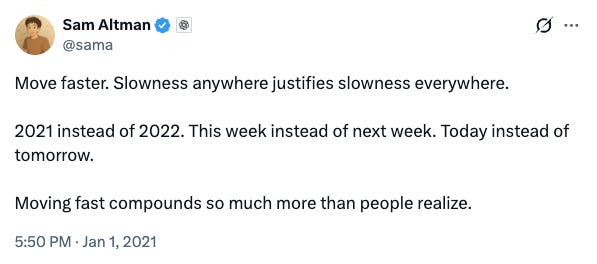
You don’t need a new identity. You need a new operating cadence.
You won’t think your way into being a manager.
You’ll behave your way into it.
So do this today:
Write your “new job” in one sentence
If you can’t say it, you’ll keep doing the old game.
Template:
“My job is to increase team throughput by building trust, clarity, and standards.”
Put it somewhere visible.
Pick one thing you will stop doing
Most first-time managers fail by over-functioning.
Pick one:
Stop jumping into tickets to feel useful.
Stop answering everything in real time.
Stop being the default decision maker.
Stop rewriting people’s work to match your taste.
Trade-off: you’ll feel slower for a few weeks.
Upside: your team stops orbiting you.
Run a 30-minute expectation reset
Not a vision speech. A contract update.
Answer, clearly:
What matters most this quarter.
What “good” looks like (observable).
How decisions will be made.
What you’ll protect them from.
What you can’t promise.
Then say the quiet part out loud:
“If you’re guessing where you stand, that’s my failure. Ask.”
Build one clean interface (and defend it)
Most first-time managers die by a thousand pings.
Not because people are needy.
Because you’re still the default router.
So create one interface that reduces dependency on you:
Pick one:
Decision owner for a recurring area (prioritization, incident comms, release go/no-go).
Escalation rule for when something comes to you (and when it doesn’t).
Single place where work status lives. No “quick updates” across five channels.
Write it in 5 lines:
What this covers
Who owns it
How to use it
When to escalate
What happens if someone bypasses it (polite, but real)
Trade-off: you’ll feel less “in control”. Some calls will be imperfect.
Upside: you stop being the bottleneck.
Do the hard thing before it becomes politics
If there’s one uncomfortable conversation you’re delaying, it’s already costing you.
Have it today.
Be direct. Be fair. Be specific.
Rule: Clear is kind. Late is expensive.
Conclusion
If you’re a first-time manager, your biggest risk isn’t lack of talent.
It’s playing the old game with a new title.
You’ll feel it in the first weeks: less flow, more ambiguity, more coordination, less visible output.
That’s not failure.
That’s physics.
The job is no longer to be the smartest person in the room.
The job is to build a room of smart people that works without you.
So don’t memorize “manager tips”.
Build principles.
Then behave like them.
Every day you either compound, or you spend it.
Nothing is neutral.
Start today. Not tomorrow.
References
French, J. R. P., Jr., & Raven, B. (1959). The bases of social power. In D. Cartwright (Ed.), Studies in Social Power (pp. 150–167). Ann Arbor, MI: Institute for Social Research, University of Michigan. (SCIRP)
Rousseau, D. M. (1989). Psychological and implied contracts in organizations. Employee Responsibilities and Rights Journal, 2(2), 121–139. https://doi.org/10.1007/BF01384942 (link.springer.com)
Lütke, T. (2020). “Trust batteries” (interview). The Knowledge Project (Farnam Street), Episode #41. (fs.blog)
Altman, S. (2021, January 1). “Move faster… Slowness anywhere justifies slowness everywhere… Today instead of tomorrow…” (Post on X/Twitter). (growupfastbook.com)